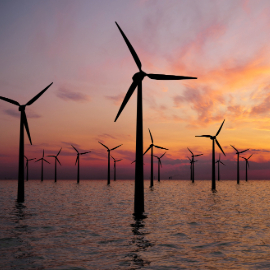
Climate & Sustainability

The climate crisis reveals our deep entanglements with the more-than-human world, including ecosystems, species, rivers, atmospheres, and the living systems we depend on. Yet AI development remains stubbornly human-centred, optimising for efficiency whilst consuming enormous resources and concentrating power. Your research could help reimagine AI as part of broader socio-ecological systems, designed with rather than merely for the communities and ecosystems it affects.
You might explore how AI can amplify non-human perspectives in environmental governance, develop frameworks that account for impacts alongside human needs, or pioneer participatory approaches that honour the agency of rivers, forests, and soil alongside citizen voices. Potential directions include investigating how technologies can support extreme climate mitigation, ecological restoration and regeneration, examining how indigenous cosmologies challenge Western notions of intelligence and agency, or developing methods that make visible the entanglements between data centres, energy grids, water systems, and biodiversity.
This theme asks: What does justice look like when we expand our circle of concern beyond humans? How can AI support climate mitigation or thriving ecologies rather than just efficient systems? Your doctoral research could influence how we design technologies that recognise our interdependence with the living world.
Place-based Context: North East England
The North East offers rich opportunities for exploring more-than-human approaches to climate AI. The region’s rivers, estuaries, and North Sea coast face rising seas and changing ecosystems. Former industrial landscapes are sites of ecological regeneration where post-mining communities navigate relationships with recovering nature. Urban wildlife corridors intersect with smart city infrastructures, raising questions about whose needs technologies serve.
Your research could work with communities stewarding the Northumberland coast’s unique biodiversity, examine how Northumbrian Water’s climate adaptation affects river ecosystems and the species they support, or explore how Newcastle’s urban forests and green networks might inform AI-supported ecological monitoring. The region’s agricultural landscapes, peatlands, and coastal habitats provide contexts for investigating how technologies can support the flourishing of multispecies communities alongside human livelihoods.
The North East AI Growth Zone represents £30 billion in investment connecting data centres, energy infrastructure, and regional transformation. Your research could critically examine these entanglements: where does the electricity come from? What water resources do data centres require? How do these infrastructures affect local ecologies, and how might communities shape more regenerative alternatives?
Relevant Partner Organisations
Your research could engage partners addressing socio-ecological challenges across scales. Northumberland County Council, Newcastle City Council and the North of Tyne Combined Authority are implementing climate strategies affecting urban ecosystems, green infrastructure, and community access to nature. Northumbrian Water manages water systems connecting upstream peatlands, urban rivers, treatment infrastructure, and coastal estuaries in complex ecological relationships.
The International Centre for Life Trust explores connections between biological sciences, public engagement, and environmental futures. Tyne & Wear Archives & Museums hold collections documenting the region’s industrial past and ecological transformations. VONNE connects community organisations working on environmental justice and place-based stewardship.
These partnerships enable research moving between scientific monitoring, indigenous and local knowledge systems, community land management practices, and policy frameworks, recognising that understanding socio-ecological systems requires multiple ways of knowing.
 International Centre for Life Trust
 Newcastle City Council
 North East Combined Authority
 North East Museums
 Northumberland County Council
 Northumbrian Water
 VONNE
VONNE
Related Articles and Reading
More-than-Human HCI
Participatory design methods for sustainable interaction design
2024.
HCI for Climate Resilience
2025.
Ecological Perspectives
How Viable are Energy Savings in Smart Homes?
2024.
Situated Knowledges
Connecting audiences with climate change
2024.
Material Entanglements
Understanding the environmental impact of generative AI
2025.
Generative AI and Environmental Impact
2024.
Multispecies Flourishing
Artificial Intelligence Meets Citizen Science
2020.
UK Government Policy
National AI Strategy
2021.
AI Opportunities Action Plan
2025.
Clean Energy Superpower Mission: Areas of Research Interest
2024.
Artificial Intelligence Research to Enable UK's Net Zero Target
2023.
European Union Policy
The Role of Artificial Intelligence in the European Green Deal
2021.
Horizon Europe Strategic Plan 2025-2027
The European Green Deal
2019.