
AI in Learning & Education

Education exemplifies AI’s qualitative turn, where generative systems produce cultural outputs such as essays, explanations, and creative work that demand contextual interpretation rather than simple benchmarking. Yet current educational AI often operates through narrow metrics that homogenise learning, perpetuating limited conceptions of intelligence whilst marginalising alternative ways of knowing. Your research could challenge this, exploring how AI might engage meaningfully with educational complexity rather than flattening it.
You might investigate human-AI ensembles in learning contexts, moving beyond assistant models toward genuine collaboration that amplifies collective capabilities. Potential directions include developing interpretive educational AI capable of representing multiple valid perspectives, employing participatory approaches where diverse communities shape systems reflecting their epistemologies, examining how algorithmic homogenization affects learners and educators, or reimagining assessment to value contextual judgement over standardised outputs. This addresses real-world challenges: fewer than 10% of schools have AI guidance, assessment systems fail when AI generates acceptable work, and marginalised communities risk exclusion from design processes.
We welcome proposals employing participatory design that centres community voice, critical approaches examining power dynamics in educational technology, mixed methods integrating interpretive depth with empirical patterns, and speculative methods exploring alternatives to techno-determinism.
Place-Based and Regional Context
The North East offers opportunities for investigating how educational AI might resist homogenization and honour local contexts. You could collaborate with Newcastle City Council and North of Tyne Combined Authority, exploring community-centred approaches that develop AI with rather than for diverse populations. Regional partners like Sunderland Software City and Innovation SuperNetwork provide access to EdTech developers where your research could advocate for interpretive, culturally responsive systems over standardised solutions.
The area’s educational diversity enables investigation of how algorithmic systems perpetuate or challenge inequalities. Rather than treating this as a technical problem requiring scaled solutions, you could explore how different communities might shape AI, reflecting distinct epistemologies. NHS partnerships enable examination of human-AI ensembles in healthcare education. The region’s industrial transformation offers sites for investigating workplace learning where AI might enhance rather than displace situated expertise.
Relevant Partner Organisations
 Cabinet Office
 Department for Science, Innovation and Technology
 Digital Safety CIC
 Google
 International Centre for Life Trust
 National Cyber Security Centre
 Newcastle City Council
 Nokia Bell Labs
 North East Combined Authority
 North East Museums
 Ofcom
Ofcom Thoughtworks
 Trussell Trust
 VONNE
VONNE
Partners enable challenging, narrow EdTech paradigms. Newcastle City Council and North of Tyne Combined Authority support exploring alternatives to dominant models. Technology partners (Nokia Bell Labs, Google, Thoughtworks) offer opportunities influencing development toward interpretive approaches. Policy bodies (Ofcom, DSIT, National Cyber Security Centre, Cabinet Office) enable examining governance supporting AI plurality. Third sector organizations (VONNE, Trussell Trust, Digital Safety CIC) connect with communities often excluded from design. Cultural partners (Tyne & Wear Archives & Museums, International Centre for Life Trust) provide contexts where interpretive depth matters profoundly. Healthcare partners enable the investigation of professional learning ensembles.
Related Articles and Reading
Participatory Design and Co-Creation
Proceedings of CHI '24
2024.
Learner Agency and Autonomy
Impact of AI Assistance on Student Agency
2024. Computers & Education, 210. doi:10.1016/j.compedu.2023.104967
Exploring Autonomy in the AI Wilderness: Learner Challenges and Choices
2024. Education Sciences, 14(12). doi:10.3390/educsci14121369
Equity and Digital Divides
AI and the Next Digital Divide in Education
2023. Brookings Institution.
Digital Divide in AI-Powered Education: Challenges and Solutions for Equitable Learning
2025. Journal of Information Systems Engineering and Management, 10(21s). doi:10.52783/jisem.v10i21s.3327
Assessment and Academic Integrity
The Impact of Generative AI on Academic Integrity of Authentic Assessments Within a Higher Education Context
2024. British Journal of Educational Technology. doi:10.1111/bjet.13585
Ensuring Academic Integrity in the Age of ChatGPT: Rethinking Exam Design, Assessment Strategies, and Ethical AI Policies in Higher Education
2025. Contemporary Educational Technology, 17(1). doi:10.30935/cedtech/15775
Teacher Roles and Professional Development
Types of Teacher-AI Collaboration in K-12 Classroom Instruction: Chinese Teachers' Perspective
2024. Education and Information Technologies, 29, 17433-17465. doi:10.1007/s10639-024-12523-3
AI Literacy Frameworks
What is AI Literacy? Competencies and Design Considerations
2020. Proceedings of CHI '20. doi:10.1145/3313831.3376727
Revealing an AI Literacy Framework for Learners and Educators
2024.
A Framework for the Learning and Teaching of Critical AI Literacy Skills
2025.
AI Literacy Framework for Primary and Secondary Education
2025.
UK Government Policy
Generative Artificial Intelligence (AI) in Education
2023.
AI in Schools and Further Education: Findings from Early Adopters
2025.
European Union Policy
Ethical Guidelines on the Use of Artificial Intelligence and Data in Teaching and Learning for Educators
2022.
Artificial Intelligence in Education, Culture and the Audiovisual Sector
2021. Report A9-0127/2021.
International Guidance
Interpretive and Alternative Approaches to AI
Doing AI Differently: Rethinking the Foundations of AI via the Humanities
2025. White Paper, The Alan Turing Institute.
Research
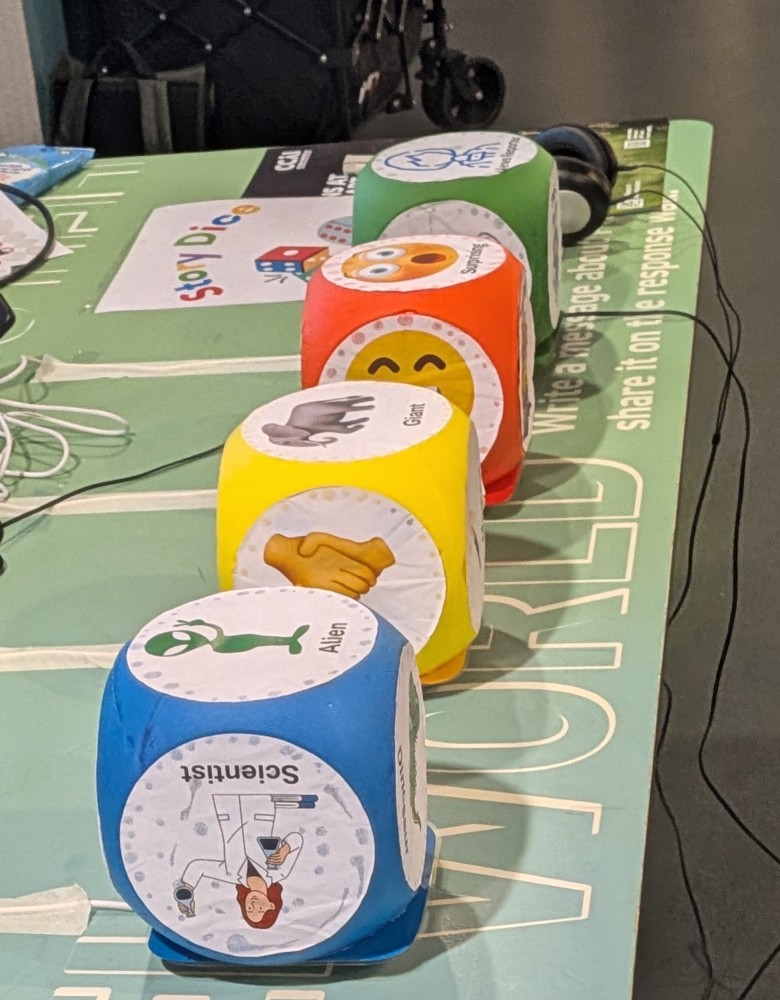 Interactive Exhibits for AI Literacy
Publications
2026
Shadows, Doodles and Dice: Three Demos for Inter-generational Interactions around AI Literacy
Dan Jackson, Luís Carvalho, William Imoukhuede, Christopher Jackson, Xixiang Nie, Maureen Mwadime, +3



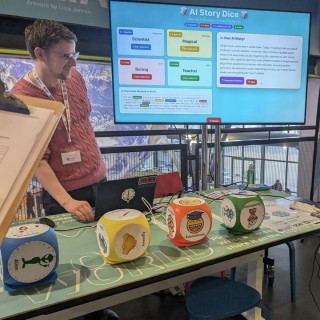 Spotlight on... AI